

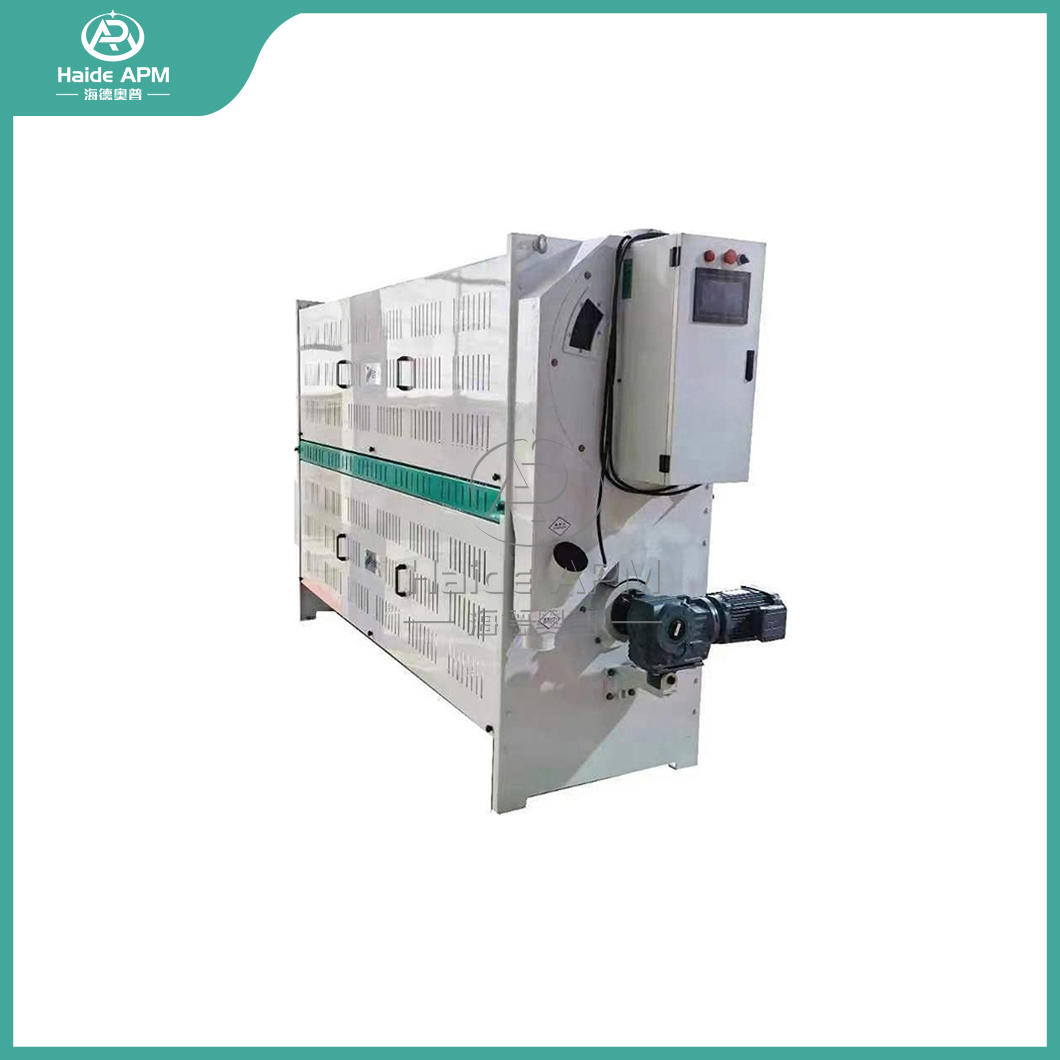
The Principle and Versatile Functions of Indented Cylinder
The indented cylinder is a core precision separation device widely used in agricultural processing and seed cleaning fields. Specialized in length-based particle sorting, the indented cylinder effectively purifies granular agricultural materials and removes mixed impurities. Unlike conventional screens that sort materials by width or thickness, the indented cylinder relies purely on particle length differences, making it highly targeted for grain and seed purification.
The working principle of the indented cylinder depends on its unique structural design. The indented cylinder is a horizontally rotating metal cylinder with countless uniform concave indents on its inner wall. During operation, raw materials are evenly fed into the rotating indented cylinder. Short particles and small impurities fit perfectly into the tiny indents. As the indented cylinder rotates, these embedded short particles are lifted to a certain height and fall into the internal collecting trough under gravity, which realizes the removal of short impurities.
In contrast, long impurities such as weed seeds and stalk fragments are too long to be fixed in the indents of the indented cylinder. These long impurities slide along the cylinder wall with rotation and are finally discharged from the tail outlet. Notably, the indented cylinder features flexible working modes: it can remove only short impurities, only long impurities, or eliminate both long and short impurities simultaneously in one processing cycle. By adjusting the indented cylinder’s rotating speed, feed rate and indent specifications, users can adapt to different purification requirements and ensure high sorting accuracy.
The core function of the indented cylinder is high-precision impurity removal and material classification. It efficiently removes shriveled particles, broken grains and tiny short impurities, as well as elongated foreign impurities mixed in raw materials. The ability of the indented cylinder to remove both long and short impurities at the same time greatly simplifies the processing procedure and improves production efficiency, making it essential for standardized grain and seed processing.
The indented cylinder boasts excellent versatility and is applicable to a wide range of agricultural materials. The indented cylinder works perfectly for all kinds of beans, effectively cleaning broken beans and miscellaneous impurities to improve bean purity. Besides, the indented cylinder is suitable for flax seed processing, removing shriveled and defective flax seeds to optimize seed quality. It also performs well in purifying ryegrass seeds, eliminating mixed sundry seeds and unqualified particles to guarantee sowing quality.
In staple grain processing, the indented cylinder has irreplaceable value for rice and paddy. The indented cylinder can separate broken rice from intact rice grains and remove immature particles and fine impurities from paddy, significantly upgrading the commercial grade of rice products.
To conclude, the indented cylinder is an efficient and adaptable agricultural processing device. With its unique length-sorting principle, the indented cylinder flexibly removes long impurities, short impurities or both. Compatible with beans, flax seeds, ryegrass, rice, paddy and various granular materials, the indented cylinder remains a key equipment for high-quality agricultural material purification in modern processing industries.